-
 Email: kemaisi17710570236@gmail.com
-
 Tel: +86 18031173072
 Email: kemaisi17710570236@gmail.com
Tel: +86 18031173072
Selecting a reliable sausage filling machine Supplier often comes down to a critical balance between volumetric precision and the thermal stability of the meat emulsion. In high-throughput processing, even a minor temperature spike during the filling process can compromise the fat-protein bond, leading to poor texture and reduced shelf life.
Modern meat processing has shifted from simple mechanical stuffing to integrated systems where vacuum quantitative filling and servo-driven precision minimize air pockets and maximize density. This evolution is driven by stricter food safety regulations and a consumer demand for consistent product weight and appearance.
Understanding the intersection of mechanical design and hygienic engineering is essential for operators looking to optimize their production lines. This analysis explores the technical criteria for equipment selection and the operational factors that determine long-term efficiency in sausage manufacturing.


The core objective of a filling system is to transport a semi-solid meat batter into a casing without introducing air or creating shear stress that breaks the emulsion. This requires a precise synchronization between the feeding hopper and the extrusion pump.
In professional setups, the integration of the feeding channel and hopper reduces material waste and prevents contamination. Using high-quality stainless steel for all contact parts is non-negotiable, as it ensures a smooth surface that resists bacterial biofilm accumulation and simplifies the CIP (Clean-In-Place) process.
The efficiency of a meat processing line depends on the synergy between various components. For instance, the transition from a meat grinder to a filling machine must be seamless. A high-capacity grinder, such as one capable of 4–7 t/h, must produce meat pellets of consistent specifications to ensure the subsequent filling machine does not experience pressure fluctuations.
Servo-driven systems have largely replaced simple pneumatic actuators in high-end filling machines. These systems allow for millimetric control over the quantitative filling volume, which is critical for reducing product giveaway and ensuring regulatory compliance regarding labeled weights.
Beyond the filler, the broader line often includes Vacuum Mixers and Saline Injection Machines to prepare the meat's texture and moisture content. When these are synchronized with a high-speed twisting or tying machine, the result is a fully automated flow that minimizes human intervention and contamination risks.
Heat is the primary enemy of meat emulsions. During the grinding and filling stages, friction between the meat and the machinery walls generates thermal energy. If the temperature of the meat rises significantly, the fat begins to melt and separate from the protein matrix, resulting in a "fatty" surface and poor binding.
Low-friction design and the ability to process frozen meat (down to -10 ℃) are essential for maintaining a stable cold chain during production, ensuring that the final product retains its structural integrity.
Equipment from experienced manufacturers, such as Hebei Kemes Machinery Equipment Co., Ltd., focuses on optimizing the auger speed and plate diameter to reduce mechanical shear. By keeping the temperature rise to a minimum, the meat preserves its fresh characteristics and the emulsion remains stable throughout the stuffing process.
When evaluating the performance of a production line, operators look at the "Value Index" of various operational factors. Capacity is the obvious metric, but the reliability of electrical components—such as the use of DELIXI circuit breakers and TENGEN soft starters—determines the actual uptime of the facility.
A balanced system ensures that the meat grinder's output (e.g., 55 kW power capacity) matches the filling machine's intake speed, preventing bottlenecks that could cause meat to sit and warm up in the hopper.
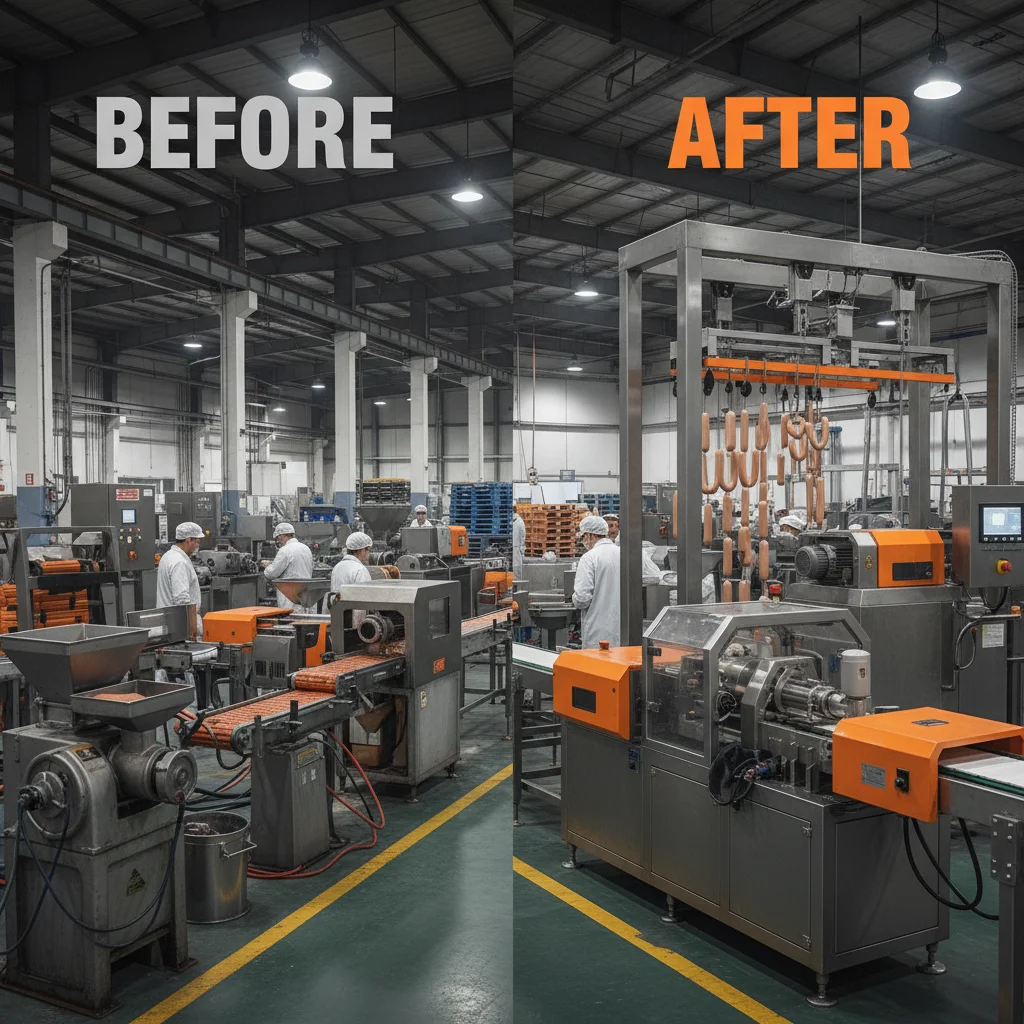
In a typical industrial setting, a manufacturer might integrate a Vane-Type Vacuum Quantitative Filling Machine with an Electric Servo Double-Clip Punching Machine. This combination allows for the high-speed production of sausages with precise length and weight, while the vacuum environment eliminates the risk of oxidative rancidity caused by trapped air.
For operations handling larger volumes of raw materials, adding a TS200LC200 Meat Elevator ensures that meat is moved to the grinder without manual lifting, reducing workplace injuries and ensuring a constant feed rate that stabilizes the machine's power consumption.
The industry is moving away from simple timed filling toward sensor-based, quantitative systems. The shift toward "Smart Manufacturing" means that filling machines are now often equipped with PLC (Programmable Logic Controllers) that can adjust the filling speed in real-time based on the viscosity of the meat batter.
Sustainability is also becoming a driver for equipment design. Reducers from brands like Sanlian and optimized motors are being utilized to lower the kWh per ton of processed meat, reducing the carbon footprint of the facility without sacrificing output.
Furthermore, the integration of fully automatic smoking furnaces and vacuum tumbling machines into a single digital ecosystem allows managers to track each batch from raw material injection to the final packaged product, enhancing traceability and food safety.
Choosing the right equipment requires a move beyond simply looking at the price tag. A buyer must evaluate the "Total Cost of Ownership," which includes the energy consumption of the motor, the frequency of seal replacements, and the ease of cleaning the stainless steel surfaces.
Trade-offs often exist between speed and precision. While some machines offer extremely high throughput, they may struggle with varied meat types (e.g., switching from lean pork to a high-fat blend). A versatile system with adjustable plate hole sizes (4–35 mm) provides the flexibility needed for diverse product lines.
The following framework helps in comparing different equipment configurations based on typical industrial requirements.
| Feature | Manual/Pneumatic | Servo-Driven | Fully Integrated Line |
|---|---|---|---|
| Weight Precision | Moderate | High | Extreme |
| Labor Requirement | High | Medium | Low |
| Throughput Rate | Low | Medium-High | Very High |
| Setup Flexibility | High | Moderate | Low |
| Initial Investment | Low | Moderate | High |
| Hygiene Control | Manual | Standardized | Automated/CIP |
Vacuum quantitative filling removes air trapped within the meat emulsion during the stuffing process. This prevents the formation of air pockets in the final sausage, which significantly improves the product's visual appearance, increases the density, and extends shelf life by reducing the internal oxygen available for aerobic bacteria to grow.
The use of high-quality, bright, and smooth stainless steel is mandatory for meeting international food hygiene standards (such as HACCP). Non-porous surfaces prevent the accumulation of food residues and bacteria, ensuring that cleaning agents can effectively sanitize the machine without leaving corrosive residues that could contaminate the meat.
Meat that is too cold (below -10 ℃) can become overly brittle, causing irregular cutting and putting excessive strain on the motor and blades. Conversely, meat that is too warm may begin to smear rather than cut. Maintaining a temperature around -10 ℃ ensures the optimal balance between cutting precision and machine longevity.
Plate hole size (e.g., 4–35 mm) determines the final texture of the meat pellets. Smaller holes are used for fine emulsions like frankfurters, while larger holes are suited for coarse sausages. A machine with interchangeable plates allows a producer to switch between different product lines without investing in multiple grinders.
Most professional fillers are designed to handle both natural and artificial casings. However, the pressure settings must be adjusted. Natural casings are more delicate and require lower, more consistent pressure to prevent bursting, whereas collagen or plastic casings can withstand higher throughput speeds.
A soft starter, such as the TENGEN models, reduces the initial current surge when a large motor (like 55 kW) starts. This prevents electrical spikes in the factory grid and reduces mechanical stress on the belts and gears, significantly extending the lifespan of the drive system and reducing maintenance downtime.
Optimizing a sausage production line is a multidisciplinary challenge that requires a deep understanding of both food chemistry and mechanical engineering. From maintaining strict thermal controls to implementing servo-driven precision, every decision impacts the final product's quality and the facility's profitability.
For those seeking a comprehensive sausage filling machine Supplier, the focus should remain on integrated solutions that prioritize hygiene, energy efficiency, and scalable throughput to meet the demands of the modern global meat market.

If you are interested in our products, you can choose to leave your information here, and we will be in touch with you shortly.