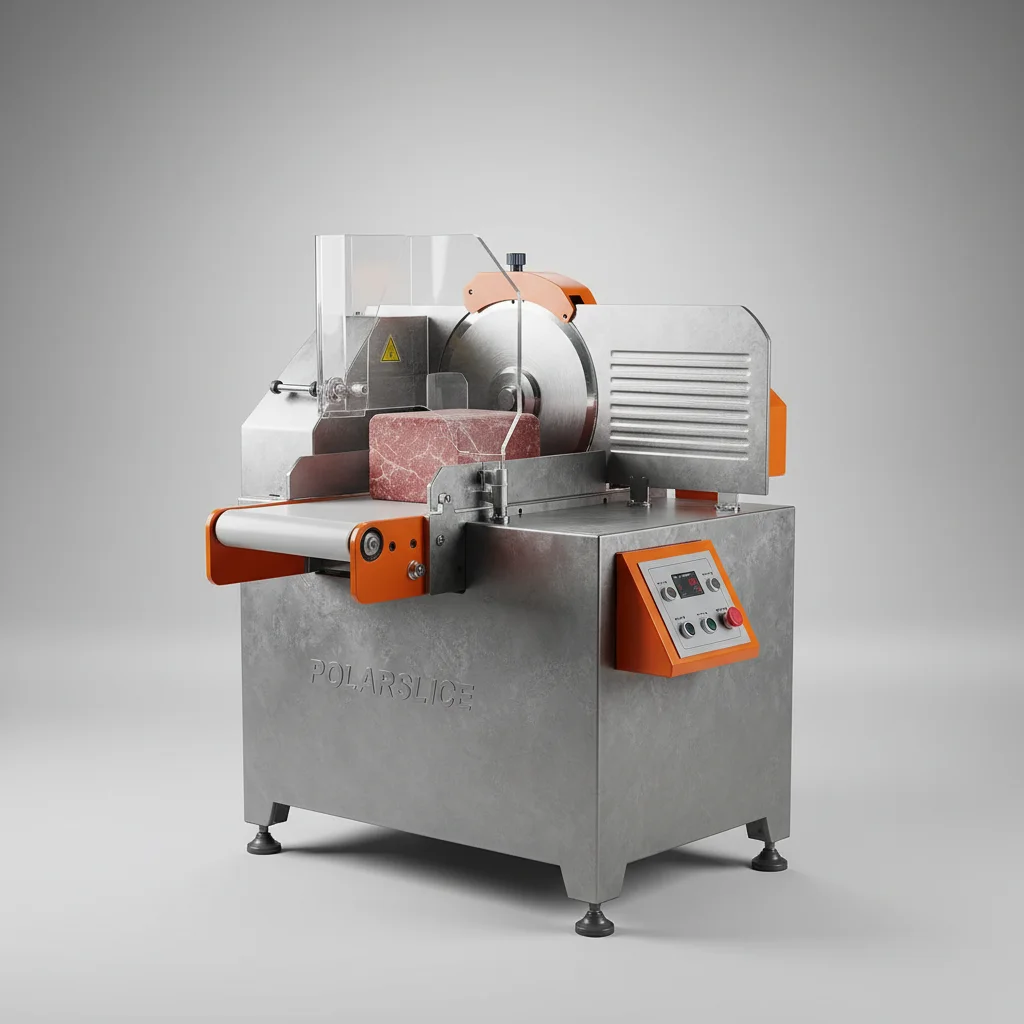
Precision dicing of frozen proteins presents a unique mechanical challenge, as the crystalline structure of frozen meat requires specific shear forces to avoid crushing the product. For industrial processors, finding a reliable frozen meat dicing machine Manufacture partner is not merely about purchasing hardware, but about optimizing the balance between throughput and cubic precision.
The transition from manual cutting to automated dicing systems drastically reduces labor intensity and eliminates the inconsistencies associated with human operation. Modern frozen meat dicers leverage high-torque motors and specialized blade geometries to ensure that every cube meets strict specifications, regardless of the meat's initial freezing temperature or density.
Whether integrated into a comprehensive meat processing line or operating as a standalone unit, the efficiency of the dicing process directly impacts the yield and market value of the final product. Understanding the technical nuances of manufacture and deployment is essential for maintaining high food safety standards and operational ROI.

The Technical Complexity of Frozen Protein Dicing

Unlike fresh meat, which is pliable and easily sliced, frozen meat behaves more like a rigid composite material. This requires the dicing machine to apply immense pressure through a very narrow cutting edge to achieve a clean break without causing "shattering" or structural deformation of the cube. The physics of the cut depend heavily on the blade speed and the force of the pusher system.
From a manufacturing perspective, the equipment must be constructed from materials that can withstand extreme temperature fluctuations and high mechanical stress. Stainless steel is the industry standard, not only for its corrosion resistance but for its ability to maintain structural integrity when under the load of cutting frozen blocks of beef, pork, or poultry.
Effective frozen meat dicing is also a matter of temperature control. If the meat is too soft, the cubes lose their shape; if too hard, the wear on the blades increases exponentially. Professional dicing solutions are engineered to operate within these narrow thermal windows to maximize yield.
Key Engineering Factors in Dicing Machine Design
The core of a high-performance dicer lies in its blade configuration and drive system. A 3D dicing approach involves a coordinate system of longitudinal and transverse blades, ensuring that the product is sliced in three dimensions simultaneously. This reduces the number of passes required and minimizes the production of "fines" or unusable meat scraps.
Motor torque is another critical variable. High-torque motors are necessary to overcome the initial resistance of a frozen block. Variable frequency drives (VFDs) allow operators to adjust the speed based on the meat type, ensuring that denser products are processed slower to maintain cut quality.
Furthermore, the integration of safety mechanisms and hygienic design is paramount. All contact surfaces must be smooth and easily accessible for cleaning to prevent bacterial growth, complying with international food safety audits and HACCP standards.
Industrial Applications and Workflow Integration
Frozen meat dicing machines are typically deployed in large-scale food processing plants where consistency is non-negotiable. Common applications include the production of frozen stews, mixed vegetable and meat packs, and specialized industrial ingredients for the catering sector. The ability to produce uniform cubes ensures that cooking times are consistent for the end consumer.
Integration usually involves a sequence of machinery. For example, raw blocks are moved from cold storage via elevators—such as the TS200/LC200 series—which eliminate manual lifting and feed the dicing machine's hopper. Following the dicing stage, the product may move into a vacuum mixer or a quantitative filling machine for packaging.
The versatility of these machines allows them to handle various proteins. While beef and pork are common, poultry and certain seafood products can also be processed, provided the blade gap and pressure settings are calibrated to the specific density of the protein.
Analyzing Precision and Throughput Benchmarks
Comparing traditional cutting methods with automated 3D dicing reveals a significant shift in operational efficiency. While manual cutting provides high flexibility, it cannot match the hourly throughput or the geometric precision of a dedicated industrial dicer.
Key performance indicators (KPIs) typically include the percentage of usable cubes versus waste, the energy consumption per ton of product, and the downtime required for blade sharpening and sanitation.
frozen meat dicing machine Manufacture Performance Metrics
The data suggests that automated systems significantly reduce the waste ratio, which directly translates to higher profitability per batch. By optimizing the cutting path, these machines ensure that the maximum amount of raw material is converted into saleable product.
Procurement Strategies for Meat Processing Equipment
When evaluating a manufacturer, procurement officers must look beyond the initial purchase price and consider the Total Cost of Ownership (TCO). This includes the cost of replacement blades, the energy requirements of the motors, and the ease of maintenance.
Verification of material grades is essential. High-grade stainless steel is non-negotiable for food-contact surfaces to prevent contamination and ensure longevity in acidic or saline environments. Buyers should request certification of the steel used in the chassis and the blades.
Additionally, the availability of technical support and spare parts can dictate the success of the installation. A manufacturer that provides a comprehensive range of related equipment, from grinders to elevators, often offers better system integration and a more streamlined service experience.
Future Trajectories in Automated Meat Cutting
The meat processing industry is moving toward increased intelligence and modularity. We are likely to see the integration of sensor-based systems that can detect the density of the meat block in real-time and automatically adjust the blade speed and pressure to optimize the cut.
Sustainability is also becoming a key driver. Future machines may utilize more energy-efficient motors and advanced blade coatings that extend the time between sharpenings, reducing the carbon footprint of the processing facility.
Furthermore, the shift toward "smart factories" means that dicing machines will probably be connected to a central management system, allowing for remote monitoring of throughput and predictive maintenance alerts based on vibration and heat sensors.
Selection Guide for Frozen Dicing Solutions
Selecting the right dicing system depends on the specific operational goals of the facility. A high-volume plant requires maximum throughput and robustness, while a specialty producer may prioritize extremely tight tolerances and versatility in cube sizes.
The following table provides a comparative look at different technical approaches to frozen meat processing based on common industry requirements.
| Solution Type | Primary Use Case | Technical Strength | Maintenance Level |
|---|---|---|---|
| High-Capacity 3D Dicer | Industrial-scale exports | Maximum cubic throughput | Medium (Regular Blade Care) |
| Precision Specialty Dicer | Gourmet frozen ingredients | Extreme size accuracy | High (Precision Tuning) |
| Modular Cutting Line | Diverse product ranges | Flexible reconfiguration | Medium (System Alignment) |
| Semi-Auto Dicing Unit | Small to Medium plants | Low entry cost | Low (Simple Mechanics) |
| Integrated Processing System | Full-cycle automation | Seamless material flow | High (Full System Sync) |
| Heavy-Duty Block Cutter | Primary portioning | High shear force capacity | Low (Robust Build) |
Ultimately, the choice should be guided by the desired output quality and the existing infrastructure of the plant. For those seeking a reliable partner in the specialized equipment sector, exploring the capabilities of established manufacturers can ensure long-term stability.
Frequently Asked Questions
Conclusion
The evolution of frozen meat dicing technology has moved beyond simple cutting to a science of precision engineering. By focusing on high-torque drive systems, superior material selection, and hygienic design, manufacturers are enabling food processors to achieve unprecedented levels of efficiency and product uniformity.
For enterprises looking to upgrade their processing capabilities or establish a new production line, selecting a partner with a comprehensive portfolio of automated food machinery is key. Those evaluating these solutions can review the relevant product and company information available through www.hamkms.com to optimize their workflow.