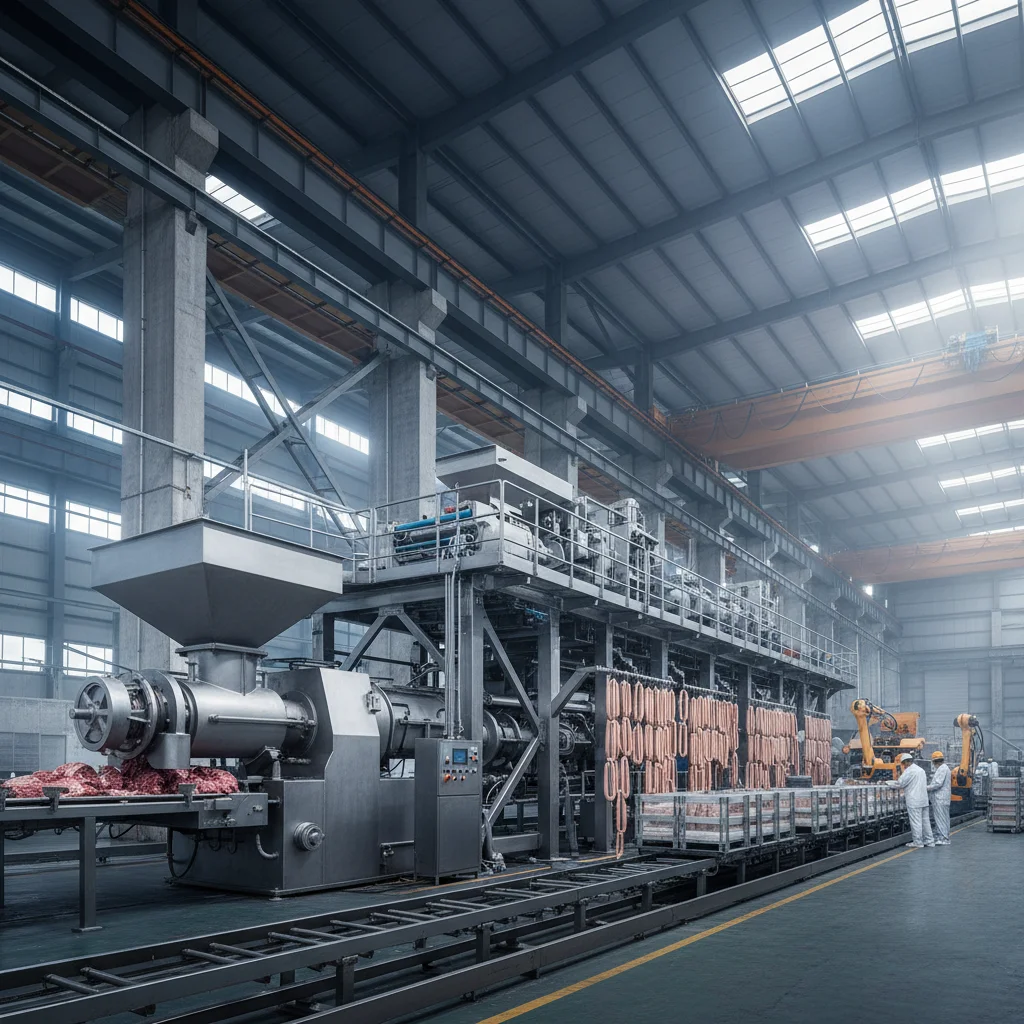
Finding a reliable meat processing machine Supplier is a critical decision for any food production facility aiming to balance high throughput with uncompromising hygiene standards. In an era where consumer demand for processed meats is skyrocketing, the efficiency of your production line directly dictates your market competitiveness and operational overhead.
Modern meat processing involves a complex sequence of operations—from the initial grind and mixing to saline injection, smoking, and vacuum packaging. A professional meat processing machine Supplier does more than sell equipment; they provide the integrated engineering solutions necessary to ensure food safety, reduce waste, and optimize the texture and flavor of the final product.
Whether you are scaling up a boutique sausage operation or managing an industrial-scale meat plant, understanding the nuances of equipment selection is paramount. By partnering with an expert meat processing machine Supplier, businesses can implement automated systems that replace labor-intensive manual tasks, thereby increasing consistency and adhering to strict international food safety regulations.

Global Industry Context of Meat Processing Equipment
The global meat processing industry is currently undergoing a massive transformation driven by the increasing demand for convenience foods and the stringent safety requirements set by organizations like the ISO and various national food authorities. As populations grow, the pressure on a meat processing machine Supplier to deliver high-capacity, sanitary, and energy-efficient machinery has never been higher.
Current market data suggests a shift toward fully automatic systems to combat rising labor costs and the volatility of manual production quality. This shift is particularly evident in emerging markets where the industrialization of food production is essential to ensure food security and reduce post-harvest losses in the livestock sector.
Defining the Role of a Modern meat processing machine Supplier
A meat processing machine Supplier is not merely a vendor of hardware but a strategic partner in food engineering. In simple terms, they provide the specialized tools—such as Frozen & Fresh Meat Grinders and Meat Vacuum Mixers—that transform raw livestock cuts into retail-ready products. This role is pivotal in bridging the gap between raw agricultural output and the sophisticated needs of the modern consumer.
Beyond the machines, a qualified supplier ensures that the equipment integrates seamlessly into a facility's existing workflow. This involves calculating the throughput of a Meat Processing Line to ensure that a Meat Cutting Machine doesn't create a bottleneck for the subsequent Sausage Tying Machine, ensuring a rhythmic, uninterrupted flow of production.
Ultimately, the connection to humanitarian needs lies in the ability to process meat safely and efficiently at scale. By reducing contamination risks through stainless steel construction and automated handling (like the TS200LC200 Meat Elevator), a reliable supplier helps prevent foodborne illnesses and ensures a stable, hygienic protein supply for urban populations.
Core Components of High-Efficiency Processing Lines
Durability is the cornerstone of any equipment provided by a meat processing machine Supplier. Given the corrosive nature of salts and the rigorous cleaning cycles (CIP) required in meat plants, the use of high-grade 304 or 316 stainless steel is non-negotiable to prevent rust and ensure long-term operational viability.
Scalability allows a producer to grow without replacing their entire infrastructure. A forward-thinking meat processing machine Supplier offers modular components—such as adding a Saline Injection Machine or a Sausage Punching Machine to an existing line—enabling businesses to diversify their product range from simple minced meat to complex cured sausages.
Precision and Cost Efficiency are achieved through automation. When a Meat Vacuum Mixer is used, the consistency of the emulsion is perfected, reducing ingredient waste and ensuring that every batch of product meets the exact weight and quality specifications, which directly protects the manufacturer's profit margins.
Global Applications and Industrial Use Cases
The application of machinery from a meat processing machine Supplier varies wildly across different global regions. In highly industrialized zones like Northern Europe or North America, the focus is on "Industry 4.0" integration, where Fully Automatic Smoking Furnaces are synced with digital inventory systems to optimize energy use and smoking times for gourmet hams.
Conversely, in rapidly developing industrial zones in Southeast Asia or Africa, the priority is often on robust, easy-to-maintain equipment that can handle fluctuations in power supply while maintaining a steady output of processed meats for local markets. Here, the Meat Elevator and basic Grinders are essential for transitioning from artisanal to industrial production.
Efficiency Comparison of Equipment from meat processing machine Supplier
Long-Term Value of Professional Grade Machinery
Investing in equipment from a reputable meat processing machine Supplier provides tangible long-term value through reduced downtime and enhanced product safety. While the initial capital expenditure may be higher than for generic machinery, the cost-per-unit drops significantly over time due to higher yield and lower waste rates.
Beyond the financial logic, there is an emotional and brand-equity angle: Trust. When a producer can guarantee a consistent texture in their sausages or a perfect cure in their meats—thanks to a precise Twisting Machine or Smoking Furnace—they build a loyal customer base that trusts the safety and quality of their brand.
Future Trends in Meat Automation and Green Tech
The future of the meat processing industry is inextricably linked to digital transformation. We are seeing a surge in "Smart Machinery" where a meat processing machine Supplier incorporates IoT sensors into Meat Cutting Machines to monitor blade wear in real-time, predicting maintenance needs before a failure occurs.
Sustainability is also taking center stage. New generations of Smoking Furnaces are being designed with heat-recovery systems to reduce carbon footprints, and Food Processing Filling Machines are being optimized to use less water during the cleaning phase, aligning food production with global green energy policies.
Furthermore, the rise of plant-based and hybrid meat alternatives is forcing suppliers to innovate. Machinery must now be versatile enough to handle different textures and viscosities, meaning the next generation of Vacuum Mixers will likely feature AI-driven adjustable speeds to accommodate a wider variety of "meat" analogues.
Overcoming Operational Challenges in Meat Production
One of the most persistent challenges in the industry is the balance between speed and sanitation. Many operators struggle with "dead zones" in their machinery where bacteria can accumulate. An expert meat processing machine Supplier solves this through "Hygienic Design," eliminating sharp corners and using seamless welds in all product-contact areas.
Another common hurdle is the skill gap in operating complex machinery. To overcome this, modern suppliers are moving toward intuitive HMI (Human Machine Interface) touchscreens that simplify the operation of a Sausage Hanging Machine or a Meat Vacuum Mixer, reducing the training time for new staff.
Finally, logistics within the plant often cause delays. The integration of the TS200LC200 Meat Elevator represents a solution to the physical strain of moving heavy carcasses, reducing workplace injuries and streamlining the flow from the receiving area to the cutting station.
Technical Analysis of Meat Processing Equipment Solutions
| Machine Category |
Primary Function |
Efficiency Gain |
Maintenance Level |
| Grinding & Cutting |
Size reduction/portioning |
High (9/10) |
Moderate (Blade sharpening) |
| Mixing & Emulsifying |
Ingredient homogenization |
Very High (10/10) |
Low (Seal checks) |
| Injection & Curing |
Brine penetration |
Medium (7/10) |
High (Needle cleaning) |
| Smoking & Drying |
Flavor/Preservation |
High (8/10) |
Moderate (Filter change) |
| Sausage Finishing |
Tying and Punching |
Extreme (10/10) |
Low (Lubrication) |
| Material Handling |
Internal Transport |
Medium (6/10) |
Low (Mechanical check) |
FAQS
Start by auditing your current daily throughput and identifying the biggest bottleneck in your line. A professional supplier will ask for your specific product mix (e.g., fresh sausage vs. cured ham) to recommend the right combination of Grinders, Mixers, and Smoking Furnaces. Look for suppliers who provide integrated lines rather than isolated machines to ensure seamless compatibility and streamlined workflow.
While the initial investment is higher, the long-term maintenance is often lower because they reduce human error and optimize energy consumption. Most modern units feature self-cleaning cycles and digital alerts for filter changes, meaning you only perform maintenance when the machine indicates it is necessary, rather than on a blind schedule, thus saving on labor and parts.
A vacuum mixer removes air bubbles from the meat emulsion, which prevents oxidation and results in a more dense, uniform texture and a brighter color in the final product. This is crucial for high-end sausages and deli meats where visual appeal and "bite" are key quality indicators. It also accelerates the mixing process, increasing your overall hourly output.
Yes, many machines from a versatile meat processing machine Supplier are designed with adjustable parameters. For example, vacuum mixers and grinders can be tuned for different viscosities and textures common in plant-based proteins. However, it is important to ensure that the materials used are compatible with the specific additives found in vegan meat analogues to prevent corrosion.
Saline injection allows for the precise introduction of brines and curing agents deep into the muscle fibers of the meat. This not only enhances flavor and preservation but also increases the weight of the product through controlled water retention, which significantly improves the profit margin per kilogram of raw material processed.
Absolutely. These elevators are engineered with industrial-grade safety locks, overload sensors, and reinforced stainless steel frames. They are designed to reduce the physical strain on workers and minimize the risk of accidents associated with manually lifting heavy meat carcasses, making the production environment safer and more compliant with occupational health and safety standards.
Conclusion
Selecting the right meat processing machine Supplier is the most impactful decision a food producer can make to ensure operational excellence. From the initial precision of a Meat Cutting Machine to the final efficiency of a Sausage Tying Machine, every piece of equipment plays a vital role in maintaining food safety, product consistency, and overall profitability. By focusing on durability, scalability, and hygienic design, businesses can transform their production capabilities and meet the rigorous demands of the global meat market.
Looking forward, the integration of AI and green energy will further redefine how we process protein. Producers who embrace these innovations today—by partnering with forward-thinking suppliers—will be best positioned to lead the industry in sustainability and efficiency. We invite you to explore our comprehensive range of industrial solutions to elevate your production standards. Visit our website: www.hamkms.com
 Email: kemaisi17710570236@gmail.com
 Tel: +86 18031173072