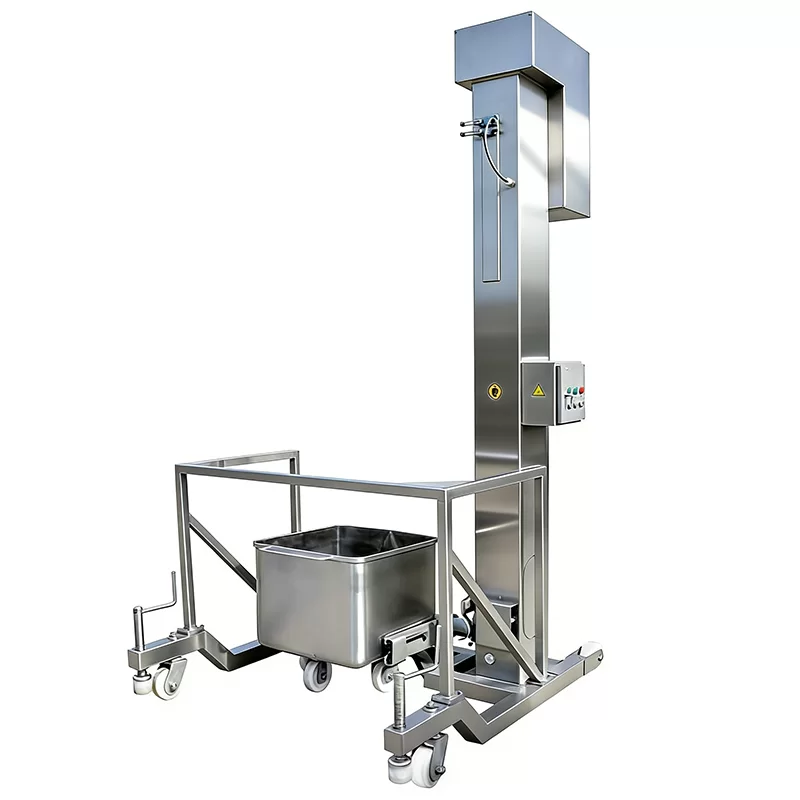
High Speed Sausage Knotting meat filler machine Supplier SGN1500
Scaling sausage production requires more than just raw capacity; it demands the elimination of manual bottlenecks that compromise consistency and hygiene. The Double-Tube High-Speed Knotting Machine SGN1500 is an industrial automation solution designed to bridge the gap between filling and packaging. By integrating seamless casing feeding and precision knotting into a single workflow, it transforms the final stage of sausage production from a labor-intensive chore into a high-velocity automated process. For large-scale meat processing plants, this system is not merely an upgrade but a strategic asset that ensures every unit meets strict length and tension specifications, drastically reducing material waste and operational overhead.

Engineering Precision in High-Volume Sausage Knotting Systems
The SGN1500 is engineered for environments where output uniformity is non-negotiable. At the heart of its operation is an advanced servo-driven control system that governs the synchronization between the conveyor speed and the knotting mechanism. This precision allows the machine to achieve speeds of up to 1200 knots per minute, ensuring that the production line maintains a steady flow without the erratic pauses common in semi-automated setups.
Constructed entirely from premium food-grade stainless steel, the chassis is designed to withstand the corrosive nature of meat processing environments. The focus on hygienic construction means that sanitation cycles are shortened, as the smooth surfaces resist biofilm accumulation and comply with global food safety standards. Operators can manage the entire process via an intuitive HMI touchscreen, allowing for rapid adjustments to knot tightness and casing length based on the specific product recipe being run.

Operational Versatility and Casing Compatibility
One of the primary challenges in meat processing is the variability of casing materials. The SGN1500 addresses this by offering universal versatility, seamlessly handling natural, collagen, and plastic casings. This flexibility allows a single production line to pivot between different sausage varieties without requiring extensive mechanical reconfiguration, making it ideal for facilities with diverse product portfolios.
To protect the machinery and reduce waste, the system incorporates a smart detection mechanism. If the casing material runs out, the automatic detection system halts the operation instantly. This prevents the knotting head from cycling empty, which would otherwise cause unnecessary mechanical wear and potential downtime. Furthermore, the integrated automatic twisting pipe flipping system optimizes the preparation phase, ensuring the casing is perfectly positioned for the high-speed knotting sequence.
Integrating Automation into the Meat Processing Workflow
The true value of the SGN1500 is realized when it is integrated directly with upstream filling equipment. By synchronizing the running speed of the knotter with the output of the filler, plants can achieve a continuous, uninterrupted workflow. This synchronization is managed via a stepless adjustable speed control and synchronization belt adjustments, which ensure that the length quantification of each sausage is perfectly consistent.
From a management perspective, the shift from manual knotting to the SGN1500 automation represents a significant optimization of labor. By reducing the dependence on highly skilled manual knotters, companies can lower their operational costs and eliminate the human-error factor that often leads to inconsistent product sizing. This streamlined approach not only increases throughput but also enhances the overall hygiene of the production floor by minimizing direct human contact with the finished product.
Technical Specifications and Performance Comparison
| Performance Metric | Manual Process | SGN1500 Automation | Industrial Impact |
|---|---|---|---|
| Knotting Speed | Low / Variable | 1200 knots/min | Ultra-High Throughput |
| Labor Requirement | High Manpower | 1 Operator | Reduced OpEx |
| Product Uniformity | Inconsistent | Highly Standardized | Brand Consistency |
| Hygiene Risk | Higher (Human Contact) | Very Low (Stainless) | Improved Safety |
| Material Waste | Moderate | Minimal (Servo-Precision) | Cost Efficiency |
Selecting the Right Equipment for Industrial Scaling
When evaluating a meat filler machine Supplier, procurement managers must look beyond the basic output numbers and consider the total cost of ownership. The SGN1500 focuses on industrial durability, utilizing a robust mechanical construction designed for sustained high-speed operation. The use of servo motors instead of traditional pneumatic systems for critical movements reduces the energy footprint and increases the precision of each knot, which is vital for maintaining the structural integrity of the sausage during subsequent smoking or cooking processes.
Reliability in a 24/7 production environment is paramount. The SGN1500 is built for minimal maintenance, with key wear parts designed for easy access and replacement. By choosing a system that integrates filling, feeding, and knotting, plants can reduce the number of transfer points where product contamination or mechanical failure typically occurs, thereby increasing the overall equipment effectiveness (OEE) of the facility.
Future Trends in Automated Meat Processing
The trajectory of the meat processing industry is moving toward fully autonomous "dark factories" where human intervention is limited to oversight and quality assurance. The SGN1500 represents a critical step in this evolution, moving away from manual dexterity toward programmable precision. Future iterations of such machinery are expected to incorporate AI-driven visual inspection systems that can detect casing defects in real-time, further reducing waste.
For companies looking to modernize, the priority should be on interoperability. The ability of the SGN1500 to synchronize with various filler types ensures that it remains a viable investment even as other parts of the production line are upgraded. As food safety regulations become more stringent globally, the transition to full stainless steel, servo-controlled automation is no longer optional but a requirement for market competitiveness and regulatory compliance.
Technical and Operational FAQ
Which types of casings are compatible with the SGN1500 machine?
The SGN1500 is highly versatile and compatible with natural casings, collagen casings, and plastic casings, making it suitable for various sausage production requirements.
How does the machine ensure the length of each sausage is consistent?
Length quantification is strictly controlled through the adjustment of the synchronization belt, ensuring every product meets the specified length requirement for uniformity.
Can the SGN1500 be integrated into an existing production line?
Yes, the machine is specifically designed to be connected to sausage filling machines, enabling a fully automated process from filling to knotting and conveying.
What happens if the casing material runs out during operation?
The SGN1500 features an automatic casing detection system that immediately halts the machine when no casing is detected, preventing production errors and mechanical wear.
Is the machine easy to clean and maintain for food safety?
Absolutely. The entire chassis is constructed from high-quality stainless steel, which is corrosion-resistant and easy to sanitize according to food industry hygiene standards.
How are the production parameters adjusted on the SGN1500?
All key parameters, including running speed and knotting settings, are managed via a user-friendly HMI touchscreen interface, simplifying operation and reducing training time.
Industry Standards and Technical Resources
- FDA Food Safety Modernization Act (FSMA) Guidelines
- ISO Standards for Food Processing Machinery
- European Food Safety Authority (EFSA) Regulations
- North American Meat Institute Technical Resources
Ready to transition your facility to high-speed automation? The SGN1500 provides the precision, speed, and hygiene required for modern industrial meat processing. Contact our engineering team today for a detailed integration analysis.
Related Automation Solutions